City Skin SOS: How Vietnamese Urban Beauty Culture Outsmarts Pollution Better Than Any Serum
Let's be honest about something. You've probably dropped serious money on a brightening serum that promised to "fight free radicals" and "neutralize environmental damage." Maybe it even worked — for a few weeks. Then your skin went right back to looking dull, congested, and just... tired.
Here's what the marketing copy doesn't tell you: pollution isn't a single-ingredient problem. And treating it like one is exactly why your fancy serum keeps falling short.
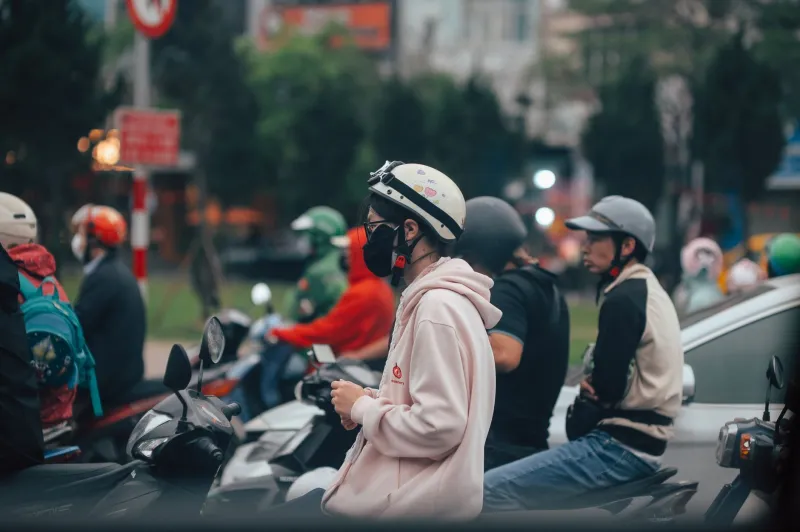
In cities like Hanoi and Ho Chi Minh City, where motorbike exhaust, construction dust, and tropical humidity create a skin-wrecking cocktail on a daily basis, Vietnamese women didn't have the luxury of throwing money at one hero product and hoping for the best. They built a system. A multi-layered, multi-step defensive approach that addresses pollution from every angle — before it lands, while it sits, and after it settles.
That system is worth paying attention to.
Why Single-Ingredient Antioxidants Miss the Point
Western skincare loves a singular solution. Vitamin C for brightness. Niacinamide for pores. Retinol for aging. It's clean, marketable, and easy to sell.
But pollution isn't one thing. It's particulate matter, heavy metals, nitrogen dioxide, ozone, and volatile organic compounds — all hitting your skin simultaneously. Each of these triggers a different kind of oxidative stress, inflammatory response, and barrier disruption. Throwing one antioxidant at that mess is like trying to stop a highway pileup with a single traffic cone.
Vietnamese skincare, shaped by centuries of living in humid, high-pollution environments, intuitively understood this. The approach isn't about one powerful ingredient. It's about stacking defenses.
The First Layer: Cleansing as Detox, Not Just Cleanup
In Vietnamese beauty culture, the cleanse is treated with the same seriousness that Western routines reserve for serums. This isn't a quick face wash situation. It's a deliberate removal ritual.
Traditionally, this starts with an oil-based cleanser — often infused with green tea, rice bran, or tamanu oil — that physically dissolves the microscopic pollution particles clinging to your skin's surface. These particles are lipophilic, meaning they bond with your skin's natural oils. Water-based cleansers alone can't touch them.
The second cleanse, usually a gentle foam or gel, clears away whatever the oil lifted. Together, they strip the day's environmental buildup without wrecking the skin barrier — which is critical, because a compromised barrier lets even more pollution in the next day.
This double-cleanse-as-detox philosophy isn't new. It's just been rebranded and sold back to us as "K-beauty innovation." Vietnamese women were doing it long before the trend hit American Sephoras.
Herbal Toners: The Forgotten Neutralizer
After cleansing, Vietnamese routines typically introduce a toner — but not the alcohol-heavy astringents that dominated American medicine cabinets for decades. We're talking about herbal water infusions: chrysanthemum, lotus, pennywort (rau má), and green tea, among others.
These aren't just hydrating. They're actively anti-inflammatory and rich in polyphenols that continue the antioxidant work the cleanser started. Pennywort, in particular, contains asiaticoside — a compound that's been studied for its ability to support collagen synthesis and reduce inflammation triggered by environmental stressors.
Applied immediately after cleansing, these toners help neutralize any residual oxidative damage before it has time to trigger a full inflammatory cascade. Think of it as a second line of defense — quiet, effective, and deeply rooted in traditional Vietnamese herbalism.
Layering Moisture as a Physical Barrier
Here's where Vietnamese skincare gets strategic in a way that most American routines don't. Rather than relying on one moisturizer to "do everything," the approach layers thin, water-based hydrators before sealing with something occlusive.
In high-pollution environments, this layering serves a dual purpose: it keeps the skin plump and resilient (a well-hydrated barrier is physically harder for pollutants to penetrate), and it creates a surface that's less sticky and porous — meaning fewer particles get trapped in the first place.
Traditional ingredients like rice water, lotus extract, and fermented plant extracts are often used at this stage. Fermented ingredients deserve special mention here — the fermentation process breaks down active compounds into smaller molecules that absorb more efficiently, delivering antioxidant and barrier-building benefits deeper into the skin than their unfermented counterparts.
Sun Protection as a Pollution Shield
In Vietnamese beauty culture, sunscreen was never just about UV rays. In a city where you're riding a motorbike through traffic, a physical barrier between your skin and the air matters — literally.
Modern Vietnamese sunscreens, many of which are now available in the US market, tend to be lightweight, often cushion or essence-based, and formulated with skin-calming botanicals alongside their UV filters. They don't just block the sun. They form a breathable shield that reduces direct contact between your skin and airborne particulates.
This dual-function thinking — sun protection and pollution defense in one step — is something Western SPF formulations are only recently starting to catch up on.
The Evening Reset: Where the Real Work Happens
Vietnamese skincare philosophy places heavy emphasis on the nighttime routine as a restorative ritual, not just maintenance. After a day of urban exposure, the skin needs more than cleansing — it needs active recovery.
This is where ingredients like nghệ (turmeric), gấc fruit extract, and traditional herbal balms come in. Applied in the evening, these botanicals work with the skin's natural overnight repair cycle to address the oxidative damage accumulated during the day. Anti-inflammatory, antioxidant-rich, and often deeply nourishing, they essentially run cleanup on whatever the daytime defense system couldn't prevent.
Nighttime masking — using thin rice flour or herbal paste masks — is also a traditional practice that's gaining renewed attention for its ability to draw out remaining impurities while feeding the skin with restorative nutrients.
What This Means for Your Routine
You don't have to overhaul everything overnight. But if pollution is a real concern for you — and if you live in any major US city, it should be — consider shifting your mindset from "find the best antioxidant serum" to "build a complete defense system."
Start by upgrading your cleanse. Make sure you're actually removing pollution, not just rinsing your face. Add a polyphenol-rich toner. Layer your hydration. And look for Vietnamese-formulated products that were literally designed for high-pollution, high-humidity environments — because those are the formulas that have already been stress-tested in conditions far more demanding than a New York City subway commute.
Your $200 serum might still have a place in your routine. But it works a lot better when it's not doing all the heavy lifting alone.