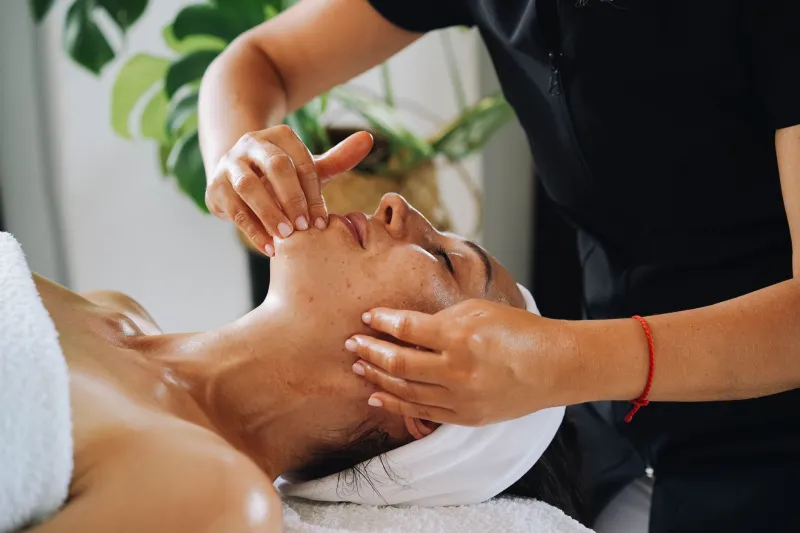
Your Skin Changes — Shouldn't Your Routine? The Vietnamese Approach to Adaptive Skincare That Predates Every Trend
Skin cycling blew up on social media a couple of years ago, and honestly, the core idea isn't bad. Take a break from harsh actives. Give your skin recovery nights. Don't use retinol and exfoliants at the same time. Solid advice.
But here's the thing: that four-day rotation — exfoliate, retinol, recover, recover, repeat — is still a rigid schedule. It assumes your skin has the same needs on Tuesday as it does on Saturday. It doesn't account for the week you're under deadline stress, or the shift in weather when fall rolls in, or the week before your period when everything suddenly gets more inflamed and reactive.
Vietnamese skincare has always accounted for those things. Not because it's trendy, but because the entire philosophy is built on one foundational truth: your skin is not static, so your routine shouldn't be either.
Rhythm Over Routine
In traditional Vietnamese beauty culture — shaped heavily by the principles of Eastern medicine and an intimate relationship with seasonal change — skincare was never conceived as a fixed daily script. It was a practice of listening.
Elders passed down the understanding that skin reflects internal balance. What you put on your face needed to respond to what was happening inside your body and around you in the environment. Hot season calls for cooling, clarifying ingredients. The cold, dry months demand deeper nourishment. A week of poor sleep or hormonal fluctuation requires a gentler touch. A stretch of humid, sweaty weather means lightening up on rich creams.
This isn't mysticism. It's practical observation refined over generations — the kind of knowledge that develops when you don't have a dermatologist on speed dial and you have to actually pay attention to what your skin is telling you.
Seasonal Rotation: Reading the Climate
Vietnam's climate varies dramatically by region and season. The north experiences a genuine cool, dry winter. The south sits in near-constant heat and humidity. The central coast gets hammered by monsoons. Vietnamese skincare evolved to meet all of these conditions, which means the concept of rotating your products with the seasons is baked into the culture at a fundamental level.
In cooler months, richer formulations come out — think warming herbs, deeply nourishing plant oils like tamanu and marula, and heavier emollients that protect skin from the drying effects of lower humidity. As temperatures rise and humidity spikes, the routine lightens dramatically. Cooling botanicals like lotus, chrysanthemum, and green tea take center stage. Oil-controlling rice-based products get more use. The skin is managed for breathability rather than barrier reinforcement.
For American consumers dealing with real seasonal swings — think Chicago winters versus August in Atlanta — this logic translates directly. Your January routine and your July routine should not look the same. If they do, someone is getting under-served.
Hormonal Awareness: The Conversation Western Skincare Is Just Starting to Have
One of the most sophisticated aspects of Vietnamese skincare's adaptive philosophy is its acknowledgment that the menstrual cycle affects skin — and that your routine should flex accordingly.
This isn't a radical new concept in traditional Vietnamese wellness culture. It's a well-understood truth that different phases of the cycle bring different skin behaviors. The follicular phase (the week or so after your period ends) tends to bring clearer, more tolerant skin — a good window for more active ingredients, gentle exfoliation, and brightening treatments. The luteal phase, the week or two before your period, often brings increased sebum production, sensitivity, and breakout vulnerability. This is the time to back off actives, lean into anti-inflammatory botanicals, and focus on barrier support.
Vietnamese herbal traditions include specific botanical formulations for different phases — cooling, clarifying herbs for higher-inflammation periods and deeply nourishing, calming preparations for the recovery phase. The idea of a single, unchanging daily routine regardless of where you are in your cycle would have seemed strange, even counterproductive.
Western skincare is slowly catching up to this with "cycle syncing" content, but it's being framed as a cutting-edge biohacking trend rather than what it actually is: common sense that Eastern beauty culture codified a long time ago.
Skin Condition as the Real Trigger
Beyond seasons and cycles, traditional Vietnamese skincare rotation is also driven by real-time skin condition — something the rigid skin cycling schedule still doesn't fully address.
If your skin is in a reactive, inflamed state — whether from stress, a product reaction, illness, or dietary changes — the Vietnamese approach says: stop. Strip back. Feed the barrier. Use the gentlest, most nourishing formulations you have and don't introduce anything new until stability returns.
Conversely, when your skin is calm, clear, and resilient, that's the window to use more potent treatments — herbal actives, brightening preparations, or deeper exfoliation rituals. You're working with your skin's natural cycles of resilience and vulnerability rather than imposing an arbitrary external schedule on it.
This is the core difference between Vietnamese adaptive skincare and Western skin cycling: one is skin-led, the other is calendar-led.
What an Adaptive Routine Actually Looks Like
Adopting this philosophy doesn't mean throwing out your products and starting from scratch. It means building a flexible toolkit rather than a fixed regimen.
Keep a core set of gentle, reliable products that work year-round — a solid cleanser, a simple hydrating toner, a dependable moisturizer. Then build out a secondary rotation of more targeted products that you reach for based on what's actually happening with your skin.
A Vietnamese-inspired approach might look like this: a lightweight rice-water essence for humid summer weeks; a richer gấc fruit oil for dry winter nights; a pennywort (rau má) gel during hormonal flare-ups; a turmeric-based brightening mask during the clear, stable stretch after your period ends.
None of this requires a complicated schedule. It just requires paying attention.
The Deeper Point
Skin cycling got people thinking about their routines differently, and that's genuinely valuable. But the conversation shouldn't stop at a four-day rotation schedule.
The Vietnamese approach asks a more interesting question: what does your skin actually need right now? Not what does the calendar say, not what the algorithm recommends, but what is your skin — this living, breathing, constantly-changing organ — actually asking for today?
That question has been at the center of Vietnamese beauty culture for centuries. It's worth making it the center of yours.