The Gentle Exfoliation Secret Vietnamese Skincare Has Always Known (No Acid Toner Required)
Walk into any Sephora or Target right now and you'll find an entire wall dedicated to acid toners. Glycolic, lactic, mandelic — the options are dizzying, and the marketing is convincing. The promise is always the same: slough off dead skin, reveal a brighter complexion, and wake up glowing. And sure, for some people, that works great.
But here's the thing. Vietnamese women have been achieving equally smooth, equally radiant skin for generations — without touching a single bottle of AHA or BHA. And the more you dig into how they do it, the more it starts to feel like the Western skincare world has been solving the right problem in a pretty aggressive way.
Why Acid Toners Aren't the Universal Answer
Acid-based exfoliants became mainstream in the US largely because they deliver fast, visible results. You apply a glycolic toner, your skin tingles, and within a few days there's a noticeable difference in texture. That feedback loop is satisfying. It feels like something is working.
The issue is that this approach can be too effective for its own good. Acids strip the skin's surface — that's the whole point — but they don't always discriminate between dead cells that need to go and the healthy barrier function that needs to stay. Overuse is incredibly common, and the result is sensitized, reactive skin that becomes dependent on more and more product just to feel normal.
For people with naturally drier skin, compromised barriers, or those living in harsh climates, the acid toner trend can genuinely backfire. Vietnamese skincare philosophy has long operated on a different premise: exfoliation should be a gentle, consistent act of maintenance, not a dramatic intervention.
Rice Bran: The Original Resurfacing Agent
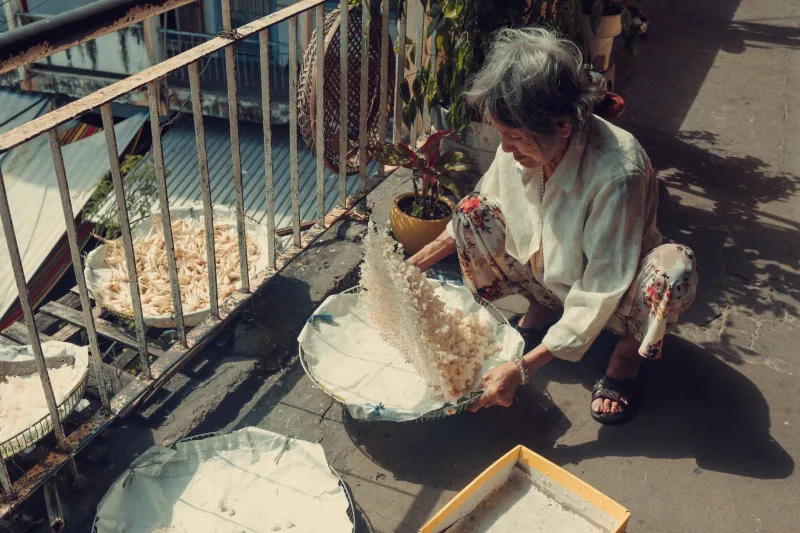
If you want to understand Vietnamese exfoliation, start with rice. Specifically, rice bran — the outer layer of the rice grain that gets removed during milling. This byproduct has been used in Southeast and East Asian beauty rituals for centuries, and it's not hard to see why.
Rice bran contains a compound called inositol, along with vitamin E, ferulic acid, and a naturally occurring enzyme complex that gently loosens dead skin cells without disrupting the barrier. When used as a powder mixed with water or a gentle cleanser, it creates a mild mechanical and enzymatic exfoliation in one step. The texture is soft enough that it doesn't cause microtears, and the active compounds actually nourish as they refine.
This is a meaningful distinction. Acid toners remove. Rice bran refines while it replenishes. That dual action is a core principle in Vietnamese skincare thinking — no step should only take without also giving something back.
Papaya Enzyme: Nature's Chemical Exfoliant
If rice bran is the mechanical side of Vietnamese exfoliation, papaya enzyme — specifically papain — is the chemical side. And it's a fascinating alternative to synthetic acids.
Papain is a proteolytic enzyme, which means it breaks down proteins. In skincare terms, that translates to dissolving the keratin bonds that hold dead skin cells together on the surface. The result? Smoother skin, improved texture, and a subtle brightness — all without the pH-dependent aggressiveness of AHAs.
The key difference is selectivity. Papain targets dead cells more specifically than acids do, which means there's significantly less risk of over-exfoliating or triggering inflammation. Traditional Vietnamese beauty preparations have incorporated papaya pulp as a softening mask for generations, and modern Vietnamese cosmetic brands have refined this into serums and wash-off treatments that feel genuinely luxurious.
For anyone who's experienced the tight, almost-burnt feeling after using a strong glycolic product, papaya enzyme is a revelation. It works at a gentler pace, but the cumulative effect on skin texture is real.
Fermented Ingredients: Exfoliation's Quiet Overachiever
Fermentation is having a moment globally in skincare, but Vietnamese beauty has been banking on it for a long time — particularly fermented rice water, which is a staple in many traditional routines.
When rice is fermented, the process produces organic acids (yes, naturally occurring ones), enzymes, and a compound called pitera — essentially a nutrient-dense liquid that's rich in amino acids and minerals. Applied to skin regularly, fermented rice water provides a very mild level of chemical exfoliation through those naturally produced acids, but it also simultaneously hydrates, brightens, and supports the microbiome.
This is the kind of ingredient that doesn't announce itself. You won't feel a tingle. Your skin won't peel. But use it consistently over a few weeks and the difference in evenness and luminosity is genuinely noticeable. Vietnamese women have described this as skin that looks like it's lit from within — and it's not hyperbole.
Fermented ingredients in general align with a broader Vietnamese skincare value: working with the skin's natural processes rather than overriding them.
The Philosophy Behind the Practice
It's worth stepping back and asking why Vietnamese skincare developed this gentler approach in the first place. Part of the answer is climate — living in a hot, humid environment means the skin barrier is already under daily stress. Aggressive exfoliation in that context can quickly tip into irritation and hyperpigmentation, particularly for melanin-rich skin tones that are more prone to post-inflammatory marks.
But there's also a deeper cultural thread here. Vietnamese beauty has traditionally emphasized longevity over immediacy. The goal isn't to look dramatically different tomorrow — it's to maintain healthy, resilient skin for decades. That long-game thinking naturally leads to gentler methods. You don't torch a garden to make it bloom faster.
For American consumers who've been trained by marketing to expect instant results, this can feel counterintuitive. But the evidence is right there in the skin of Vietnamese women across generations: consistent, gentle care accumulates into something remarkable over time.
Making the Switch (Or Just Adding Balance)
None of this is to say you need to throw your acid toner in the trash. If it works for you and your skin is happy, that's genuinely fine. But if you've been experiencing sensitivity, dryness, or a feeling that your skin is perpetually raw and reactive, it might be worth exploring what Vietnamese beauty has been doing all along.
Rice bran cleansing powders are increasingly available through Asian beauty retailers and online marketplaces. Papaya enzyme masks show up in both traditional preparations and modern Vietnamese cosmetic lines. And fermented rice water — whether DIY or bottled — is one of the most accessible entry points into this whole approach.
Start slowly. Let your barrier recover if it needs to. And pay attention to how your skin feels over weeks, not just days. That's the Vietnamese way — and honestly, it might just change the way you think about exfoliation entirely.