Real Skin Is Not a Problem to Solve: What Vietnamese Beauty Culture Actually Teaches Us About Texture

Open Instagram or TikTok on any given morning and you'll be met with a parade of impossibly smooth complexions — pores airbrushed into oblivion, skin that looks more like polished ceramic than something attached to a living, breathing human being. It's aspirational in the way that most things on social media are: technically possible for approximately no one without heavy filtering, ring lights, and a lot of strategic angles.
And yet, we've absorbed this standard so deeply that real skin — with its pores and texture and the occasional bumpy patch — feels like something to fix rather than something to simply have.
Here's the thing: Vietnamese beauty culture never really bought into that premise. And there's a lot American skincare consumers can learn from that.
The Filtered Aesthetic Didn't Arrive in a Vacuum
The obsession with poreless skin in Western beauty markets has roots in both Hollywood glamour culture and, more recently, the Korean glass skin trend, which — for all its merits — got distorted somewhere between Seoul and suburban America. What started as a focus on hydration and luminosity got repackaged as a pursuit of literal perfection: zero texture, zero variation, zero evidence that your face is actually doing the biological work of existing.
Beauty brands have profited enormously from this anxiety. Pore-minimizing primers, texture-blurring serums, smoothing acids — there's an entire product category built on convincing you that your skin's natural surface is a defect.
Vietnamese beauty philosophy, by contrast, tends to start from a different question entirely. Not how do I eliminate what I see? but how do I support what I have?
What Vietnamese Skincare Actually Prioritizes
Traditional Vietnamese beauty practices — many rooted in herbal medicine, seasonal eating, and generational knowledge passed through families — have always emphasized skin health over skin perfection. The goal is brightness, resilience, and balance. Texture, in this framework, is simply part of the landscape.
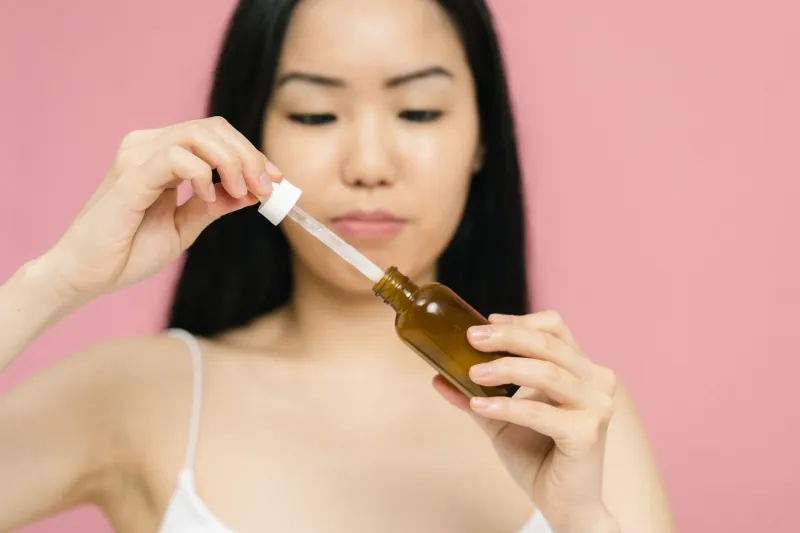
This shows up in the ingredients that Vietnamese women have reached for over centuries: rau má (gotu kola) for calming inflammation, nghệ (turmeric) for evening tone, and botanical oils used to nourish rather than strip the skin barrier. None of these traditions were ever aimed at making skin look like a filter. They were aimed at making skin function well.
When skin functions well, it looks good. But "looking good" in this context means healthy, cared-for, and alive — not digitally rendered.
Vietnamese-American Women on Relearning Their Skin
For many Vietnamese-American women, growing up between two cultures meant navigating two very different sets of beauty expectations. Several women we spoke with described a similar arc: absorbing Western beauty standards through school, media, and peer pressure in their teens and twenties, then gradually returning to the more grounded approach they'd watched their mothers and grandmothers practice.
One woman in her early thirties, who grew up in Houston, put it simply: "My bà ngoại never talked about her pores. She talked about whether her skin felt comfortable. That's it. I spent years trying to blur and smooth everything, and I was never satisfied. When I shifted to just asking 'does my skin feel good today,' everything changed."
Another, a second-generation Vietnamese-American based in Southern California, described the shift as almost political: "There's something really freeing about opting out of the idea that your face needs to be fixed. Vietnamese beauty gave me permission to just... maintain, not chase."
This isn't nostalgia for tradition's sake. It's a practical recalibration — one that tends to result in simpler routines, less product spending, and, ironically, better skin outcomes, because over-treating skin in pursuit of perfection often backfires spectacularly.
The Psychological Weight of Poreless Perfection
It's worth naming what chasing texture-free skin actually costs, beyond the dollars spent on products. Dermatologists and therapists have both noted an uptick in what's sometimes called "skin dysmorphia" — a pattern where people become hyperaware of and distressed by normal skin features that are invisible to anyone standing at a normal conversational distance.
Pores are not a flaw. They are literally how your skin breathes and regulates oil. Slight variations in tone, a bit of natural roughness on the cheeks, the faint lines that appear when you smile — these are not problems. They are evidence of a face that has been alive and present in the world.
Vietnamese beauty culture doesn't romanticize neglect, but it does draw a clear line between caring for your skin and being at war with it. That distinction matters more than any serum.
Practical Ways to Shift Your Relationship With Texture
If you're ready to stop treating your face like a renovation project, here's how to start thinking and caring for your skin the way Vietnamese beauty traditions actually suggest:
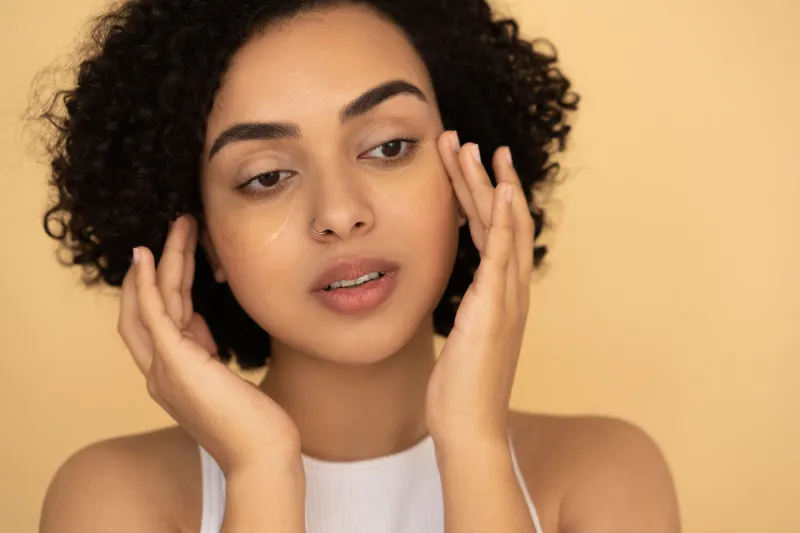
Focus on feel, not just appearance. Before you assess how your skin looks in the mirror, check in with how it feels. Tight? Comfortable? Irritated? Plump? This shifts your attention from surface aesthetics to actual skin function — which is where the useful information lives.
Simplify your active ingredients. Over-layering acids, retinoids, and exfoliants in pursuit of smoother texture often disrupts the very barrier you're trying to improve. Vietnamese-inspired routines tend to be gentler — think nourishing botanical extracts, soothing plant oils, and consistent sun protection rather than aggressive chemical intervention.
Audit your product routine for texture-related anxiety. If you're using multiple products specifically to blur, minimize, or erase texture, ask yourself what you're actually solving. Some of those products may genuinely support skin health. Others may just be feeding a loop of dissatisfaction.
Give your skin a social media break. This sounds obvious, but the filtered aesthetic is genuinely hard to unsee when you're consuming it constantly. Take a week away from beauty content and notice how your perception of your own skin shifts.
Invest in nourishment over correction. Ingredients like gotu kola, rice bran, and fermented botanical extracts — staples in Vietnamese skincare — work by building skin up rather than stripping it down. The result is skin that looks naturally healthy, not artificially smoothed.
The Skin You Have Is Worth Working With
There's a quiet confidence in the way Vietnamese beauty approaches skin — a sense that the goal is to show up for your skin, not to overhaul it. That approach doesn't mean ignoring concerns or skipping the basics. It means being a thoughtful steward of what you already have rather than a frustrated critic of what you don't.
Real skin has texture. Real skin has pores. Real skin changes with the seasons, with stress, with hormones, with age. None of that is a failure.
The Vietnamese women who've been practicing this philosophy for generations — and the Vietnamese-American women now reclaiming it — aren't settling for less. They're opting out of a standard that was never realistic to begin with, and choosing something more sustainable, more compassionate, and honestly, a lot more effective.
Your skin doesn't need to be perfect. It needs to be cared for. There's a meaningful difference, and once you feel it, it's hard to go back.